US holds two Myanmar talks as EU sanctions 105 officials
Washington is engaging the military junta to secure rare-earth minerals and release a detained citizen, while Brussels maintains its diplomatic blockade.
By Natalie Brooks ·
The European Union currently sanctions 105 individuals and 22 entities linked to Myanmar's military. This diplomatic freeze has begun to crack as the United States and Southeast Asian nations reopen talks with the junta in Naypyitaw.
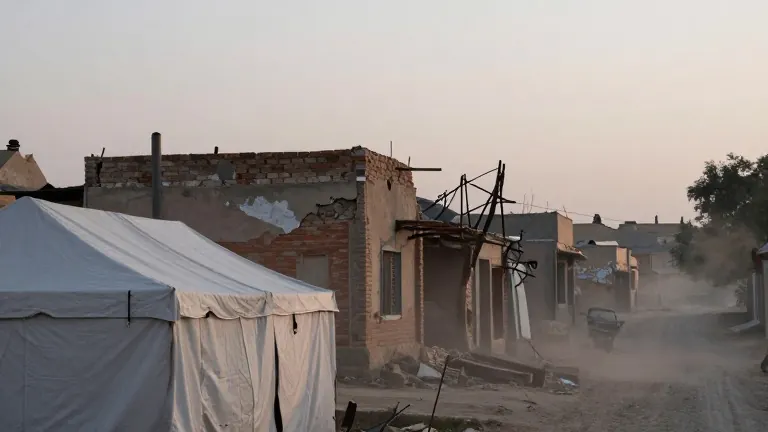
The military seized power in February 2021, triggering a civil war that has killed an estimated 100,000 people. The conflict has displaced more than 4 million citizens. In 2025 and 2026, the country held elections that installed military chief Min Aung Hlaing as president. The EU refused to recognize this result, extending its sanctions regime in April for another 12 months.
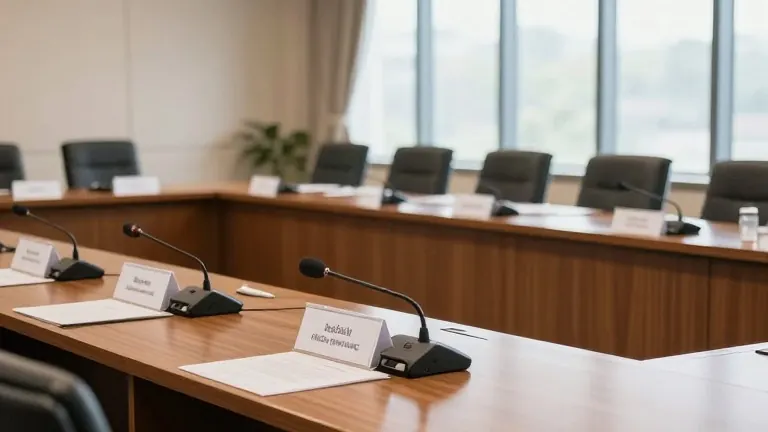
The United States shifted strategy in September by initiating two rounds of negotiations with Myanmar officials. State Department representative Michael Vance met with the military government in Naypyitaw and later in Tokyo this month. Washington seeks to address online scam centers, secure the release of American businessman Adam Castillo, and access rare-earth resources currently dominated by China.
Regional allies are moving in a similar direction. Thailand signaled frustration with the isolation policy. Thai Foreign Minister Sihasak Phuangketkeow welcomed the US engagement and proposed substantive discussions at the ASEAN summit in Manila next month. Myanmar's charge d'affaires in London recently attended an ASEAN diplomatic gathering, while a counterpart in Brussels has contacted European politicians including Czech MEP Ondrej Dostal.
Brussels remains firm on its policy of non-recognition. An EU spokesman stated that the bloc is closely monitoring the discussions led by the US, Japan, and ASEAN. The EU continues to support the regional Five-Point Consensus peace deal, which has not yet been fully implemented. Despite the diplomatic standoff, bilateral goods trade reached roughly €4 billion last year, up from €3.4 billion in 2019.
Experts note that the US may be pursuing transactional goals rather than democratic reforms. Kristina Kironska of Palacky University Olomouc argued that the EU should not abandon its credibility as a defender of human rights. She noted that the most important rare-earth mining operations are controlled by ethnic rebels, not the central military. This complicates any potential gains from negotiations with the junta.
Sabe Soe, director of the NGO Burma Centre Prague, suggested that the EU could maintain sanctions while expanding diplomacy through regional partners. She proposed that Brussels tie any easing of restrictions to improvements in humanitarian access and political freedoms. This approach would allow the EU to remain influential without formally recognizing the military-backed government.
Source: Deutsche Welle