
Tech Billionaires Drop $300 Million Into California Tax Battle
Donors including Sergey Brin and Tony Xu have outspent supporters ten to one as the one-time asset tax heads to the November 3 ballot.
By Ryan Phillips ·
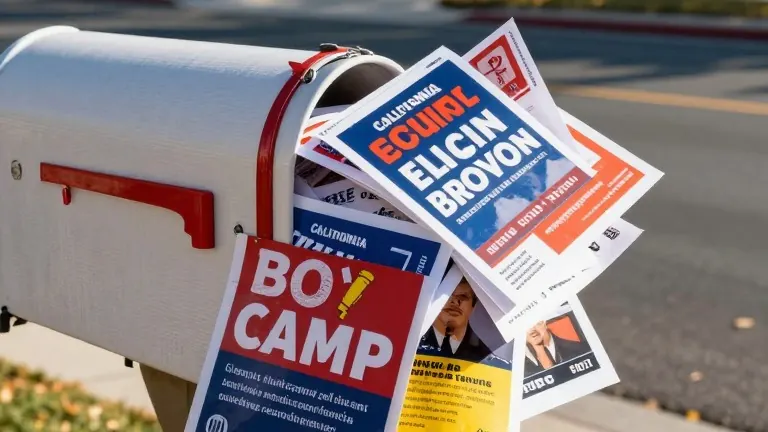
For California residents preparing for the November 3 election, the volume of mail in their inboxes has become a primary indicator of the political stakes. The state faces a decision on Proposition 40, a proposed one-time 5 percent tax on the assets of billionaires. The campaign to stop this measure has become the most expensive ballot fight in state history, according to David McCuan, a political science professor at Sonoma State University who tracks local elections.
The opposition has raised more than $300 million to block the tax. This sum dwarfs the $32 million raised by supporters. The largest donors include Google co-founder Sergey Brin, DoorDash founder Tony Xu, and Stripe co-founder Patrick Collison. Other major contributors are Ripple co-executive chairman Chris Larsen and venture capitalists John Doerr, Michael Moritz, and Vinod Khosla.
The spending has created a flood of advertising and mailers that some voters find confusing. Brian Galle, an economics professor at the University of California, Berkeley, and a co-author of the proposal, received a flyer claiming the tax could apply to anyone, including those with retirement savings. Galle stated that those claims were not part of the text he wrote. Ashley Craig, a volunteer with the pro-tax group Patriotic Millionaires, said she frequently hears from voters who believe the measure contains secret provisions to tax everyone. Any change to the tax would require a two-thirds majority in the assembly and must align with the spirit of the original measure.
The massive outlay has drawn criticism from experts who see it as a distortion of democratic process. Galle noted that the spending illustrates the very imbalance the tax aims to fix. "The irony is that Prop 40 is meant to make democracy more equal, but the billionaires are using their money to avoid that," Galle said, referencing the Supreme Court's Citizens United v FEC ruling. Francesco Trebbi, a professor at Berkeley's Haas School of Business, described the contest as "Sergey Brin v millions of Californians," arguing that the disparity erodes public trust in the system.
The fight has exposed a split within the Democratic Party. The state party endorsed the tax, but Craig reported receiving little ground support from the organization. McCuan characterized the measure as a proxy test between progressives and moderates, noting that a success could encourage progressive candidates to pursue similar ideas in the 2028 presidential race. Governor Gavin Newsom, who is considering a 2028 run, opposes the tax. He called it "poorly written" and warned it could harm the state if billionaires, whose combined wealth is estimated at $2.3 trillion, leave. Gubernatorial candidate Xavier Becerra and former congresswoman Katie Porter also oppose the measure.
Opponents have backed two additional ballot measures that could affect the outcome. One measure bars new state taxes on personal property or those imposed retroactively. The other requires state auditors to review proposed tax measures for financial impact before a vote. If either measure passes with more votes than the billionaire tax, it could negate the tax even if voters approve Proposition 40.
A recent Public Policy Institute of California poll found that voters narrowly support the tax but also back the two measures aimed at stopping it. Mark Baldassare, the institute's statewide survey director, noted that only about a third of citizen initiatives pass, placing the burden on the yes side. He plans to poll again as voters receive state guides explaining the measures.
Suzane Jiminez, chief of staff at the SEIU health workers union, which sponsored the measure, expressed confidence in the campaign. She said 3,000 volunteers have recently been knocking on doors and distributing flyers. Senator Bernie Sanders and Congressman Ro Khanna have rallied support across the state. McCuan suggested that even a defeat could benefit backers, who could blame moderates and target big tech as a political bogeyman.
Source: Al Jazeera
More Politics · World news · Report a business · Got a Story?